
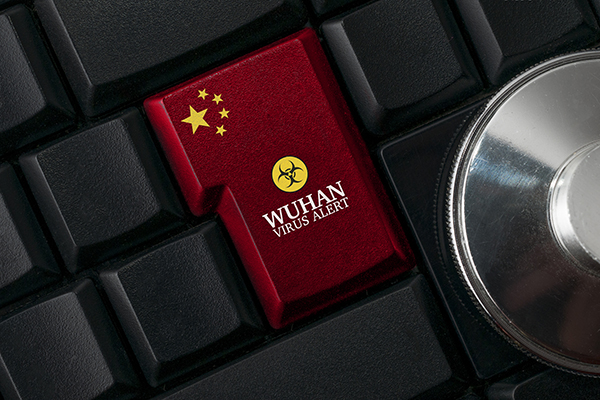
Global manufacturing and supply chains are continuing to feel the effect of the novel coronavirus epidemic as factories and logistics providers seeking to resume operations now face labor shortages and regulatory uncertainty.
While companies draw up contingency plans for production activities, supply continuation, and logistics services to cope with this complex and fast-changing situation, the crisis now looks to disrupt global supply chains until April and potentially beyond.
Considerable ruckus was made when U.S. commerce secretary Wilbur Ross suggested that the current crisis could reconfigure supply chains resulting more more concentration on North American resources.
Nick Vyas, an expert on global supply chain management at the University of Southern California Marshall School of Business, told the Financial Times in an interview that “this may become the straw that breaks the camel's back.”
Vyas also told SCMR that the issue will be further explored when USC stages its 8th Annual Global Supply Chain Excellence Summit on August 5 and 6, 2020.
The theme will be “Supply Chain Outlook 2025,” and the panel on “Corporate Social Responsibility” will scrutinize the implications for humanitarian responses to epidemics of this global scale.
Meanwhile, Resilience360 notes that while production-related challenges may be overcome in the coming weeks, limited inbound and outbound freight capacity could become the biggest obstacle in the months of March and April for supply chains to normalize.
Chinese media organizations have put forward March 1 as the date when production schedules could return to near-normal operations; however, this will largely depend on when the outbreak will peak.
To help supply chain managers keep abreast of the situation and initiate risk mitigation plans, Resilience360 has outlined the ten top challenges organizations will need to prepare for in the short and medium term amid the ongoing coronavirus outbreak.
Resilience360 is a cloud-based platform that helps companies to visualize, track and protect their business operations.
The solution facilitates intuitive supply chain visualization, tracks shipments and ETAs across different transport modes and enables near real-time monitoring of incidents capable of disrupting supply chains. Resilience360 integrates with business systems and to help supply chain managers keep track of risk in combination with their business performance indicators.
According to spokesmen, it also enables companies to better ensure business continuity, building risk profiles based on over 30 risk databases, and identifying critical hotspots using heat-maps to mitigate risks and to turn potential disruptions into a competitive advantage.
SC
MR

Latest Supply Chain News
- Supply chain resilience isn’t a data problem; it’s a judgment problem
- Beyond the hype: Building flexible and scalable supply chains in a VUCA world
- Why your supply chain risk management plan will fail
- When component verification becomes operational
- Caught between a rock and a hard place: Mapping your supply chain
- More News
Latest Resources
 Explore
Business Management News
- Why companies blame the wrong supplier … and miss the real failure
- NextGen Supply Chain Conference unveils agenda focused on AI, execution and the future of leadership
- Supply chain resilience isn’t a data problem; it’s a judgment problem
- Beyond the hype: Building flexible and scalable supply chains in a VUCA world
- Why your supply chain risk management plan will fail
- What options do you really have? Shaping the supply chain resilience funnel
- More Business Management
Latest Business Management Resources

About the Author
Patrick Burnson, Executive Editor

Patrick is a widely-published writer and editor specializing in international trade, global logistics, and supply chain management. He is based in San Francisco, where he provides a Pacific Rim perspective on industry trends and forecasts. He may be reached at his downtown office: [email protected].
Follow SCMR on social media.
@SupplyChainManagementReview on Facebook
@SCMR on Twitter
SCMR on Linkedin
Subscribe

Supply Chain Management Review delivers the best industry content.

Editors’ Picks



